
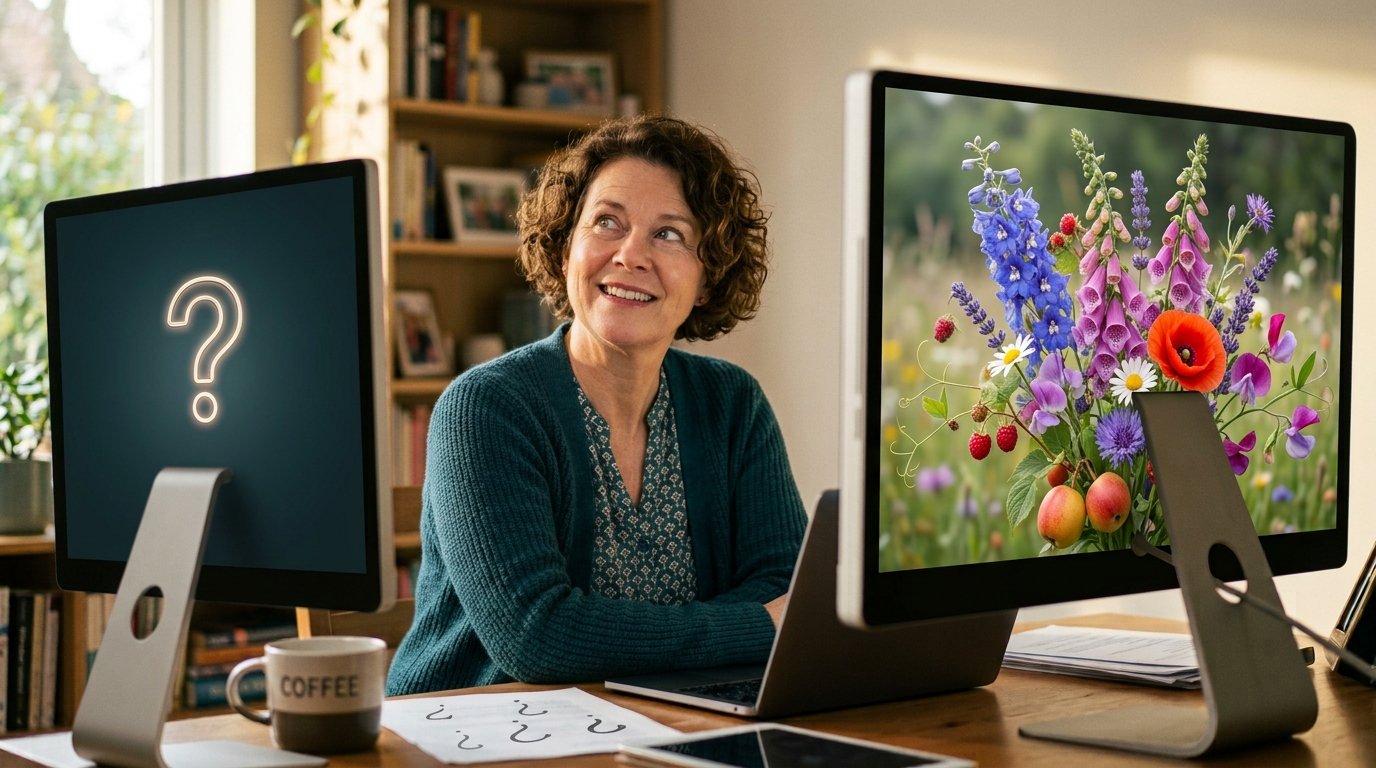
There was a time when I thought technology was something I used.
A computer helped me write. A search engine helped me find information. A smartphone helped me communicate. Software helped me organize my work.
Artificial intelligence changed that relationship.
AI did not simply give me another tool.
It changed the way I think.
And perhaps that is the most important thing about the AI revolution: its greatest impact may not be what machines can do for us, but what they allow us to become.
The Moment Everything Changed
When I first began using AI seriously, I expected convenience.
I expected faster writing, better ideas, easier research, and perhaps a little automation.
What I did not expect was a strange new experience: having something available at any moment that could challenge my assumptions, explain difficult concepts, generate possibilities, organize chaos, and help me turn an unfinished thought into something tangible.
The computer had always been good at following instructions.
AI could participate in the process of figuring out what the instructions should be.
That difference was profound.
Suddenly, the distance between an idea and an actual creation became much smaller.
A thought that once required hours of research could become a structured concept in minutes. A business idea could be examined from multiple perspectives before investing significant time or money. A complicated subject could be explored through an endless conversation rather than a stack of documents.
AI did not remove the need for thinking.
It made thinking more accessible.
From Information to Intelligence
For decades, the internet solved one enormous problem: access to information.
If you wanted to know something, you searched for it.
But information has never been the same thing as understanding.
We have more information today than any generation before us, yet having millions of pages at our fingertips does not automatically make us wiser.
AI introduces another layer.
Instead of simply asking, “Where is the information?” we can ask:
“What does it mean?”
“What am I missing?”
“What are the alternatives?”
“What happens if I approach this differently?”
This changes the role of technology.
The internet gave us access to knowledge.
AI increasingly gives us a conversational interface to explore knowledge.
That distinction may become one of the defining characteristics of the next era of computing.
AI Gave Me Permission to Create
One of the most unexpected ways AI changed my life was by reducing the psychological barrier to creation.
Many people have ideas.
Far fewer turn those ideas into projects.
The reasons are familiar: lack of time, lack of technical knowledge, uncertainty, perfectionism, or simply not knowing where to begin.
AI changes the starting point.
You no longer need to know everything before you begin.
You can begin with a question.
You can describe an idea imperfectly.
You can say, “I don’t know how to do this.”
And then start.
The first version may be rough. The strategy may be incomplete. The code may need fixing. The article may need rewriting.
But something exists.
That matters.
Creation is often less about having extraordinary talent than overcoming the friction between imagination and execution.
AI dramatically reduces that friction.
The New Superpower Is Not Knowing Everything
There is an old idea that success belongs to people who know the most.
The AI era may challenge that assumption.
When intelligent assistance becomes widely available, memorizing more information becomes less important than knowing how to ask better questions, evaluate answers, connect ideas, and make decisions.
In other words, judgment becomes more valuable.
AI can generate ten possibilities.
A human still has to decide which possibility deserves attention.
AI can summarize a thousand pages.
A human still has to understand what matters.
AI can produce an impressive image, paragraph, presentation, or piece of code.
A human still has to decide whether it is meaningful.
This is why I don’t believe AI makes human creativity irrelevant.
I believe it raises the value of human judgment.
From Worker to Director
The workplace is changing for the same reason.
For much of modern history, people were rewarded for performing tasks efficiently.
The future may reward people who can define problems clearly and orchestrate intelligent systems effectively.
The difference is subtle but enormous.
Instead of spending an entire afternoon creating a first draft, a person might spend twenty minutes directing an AI system and another hour refining the result.
Instead of manually analyzing every piece of information, a professional may use AI to identify patterns and then concentrate on interpretation.
Instead of building everything alone, an entrepreneur may operate with a collection of AI systems acting as researchers, analysts, writers, designers, programmers, and assistants.
The individual does not necessarily become less important.
The individual becomes an orchestrator.
A small team—or even one person—can potentially accomplish work that once required an entire organization.
That possibility could reshape entrepreneurship more profoundly than many traditional productivity tools ever did.
But AI Also Changed My Definition of Work
There is another side to this transformation.
If AI can increasingly perform parts of our jobs, we are forced to ask a difficult question:
What should humans actually spend their time doing?
Perhaps the answer is not “more work.”
Perhaps it is better work.
More time thinking.
More time creating.
More time building relationships.
More time exploring difficult questions.
More time learning.
More time doing things that require responsibility, empathy, taste, courage, and human connection.
Technology has repeatedly promised to save us time.
The real question is what we choose to do with the time we save.
The Risk of Becoming Too Dependent
AI has also taught me something equally important: convenience can become dependence.
If we allow AI to think for us constantly, we may gradually weaken the very abilities that make us valuable.
If we accept every answer without verification, we become less discerning.
If we let algorithms decide what we read, watch, buy, and believe, our world can become narrower rather than broader.
The future therefore requires a new kind of literacy.
Not merely digital literacy.
AI literacy.
We need to understand what AI can do, what it cannot do, when it can be trusted, when it should be questioned, and where human judgment must remain in control.
The smartest use of AI is not blind dependence.
It is intelligent collaboration.
AI Changed My Future, Too
Perhaps the biggest change is psychological.
Before AI, the future sometimes felt like something happening outside of me.
Technology was developed by companies.
Products were built by engineers.
New industries appeared somewhere else.
AI made the future feel much closer.
It became something I could experiment with today.
I could test an idea.
Build a prototype.
Learn a new subject.
Explore a business concept.
Write something I had never written before.
The future stopped being merely something to wait for.
It became something to participate in.
And that may be AI’s most powerful gift.
The Human Advantage
There is a temptation to ask whether humans will eventually become unnecessary.
I think that is the wrong question.
A more interesting question is:
What becomes possible when human imagination and machine intelligence work together?
Machines are extraordinarily good at processing patterns, generating possibilities, working at scale, and operating without fatigue.
Humans bring something different: experience, values, intuition, emotion, curiosity, responsibility, and the ability to decide what is worth pursuing.
The future will not necessarily belong to people who compete against AI.
It may belong to people who learn how to work with it without surrendering their own judgment.
AI Didn’t Change Who I Am
In the end, AI did not give me a new identity.
It gave me a new range of possibilities.
It made the distance between curiosity and action smaller.
It made learning more conversational.
It made experimentation cheaper.
It made creation faster.
And perhaps most importantly, it reminded me that we are living through a technological transition that is still in its early chapters.
The most transformative AI applications may not even have been invented yet.
Today’s AI may eventually look primitive compared with what comes next.
That is both exciting and unsettling.
But it also means we are not simply watching history happen.
We are participating in it.
AI changed my life not because a machine suddenly became capable of doing everything for me.
It changed my life because it made me realize how much more I could attempt.
And perhaps that is the real beginning of the AI age:
Not machines becoming more human, but humans discovering new possibilities for being human.